2026-08-18 ·
Newcastle
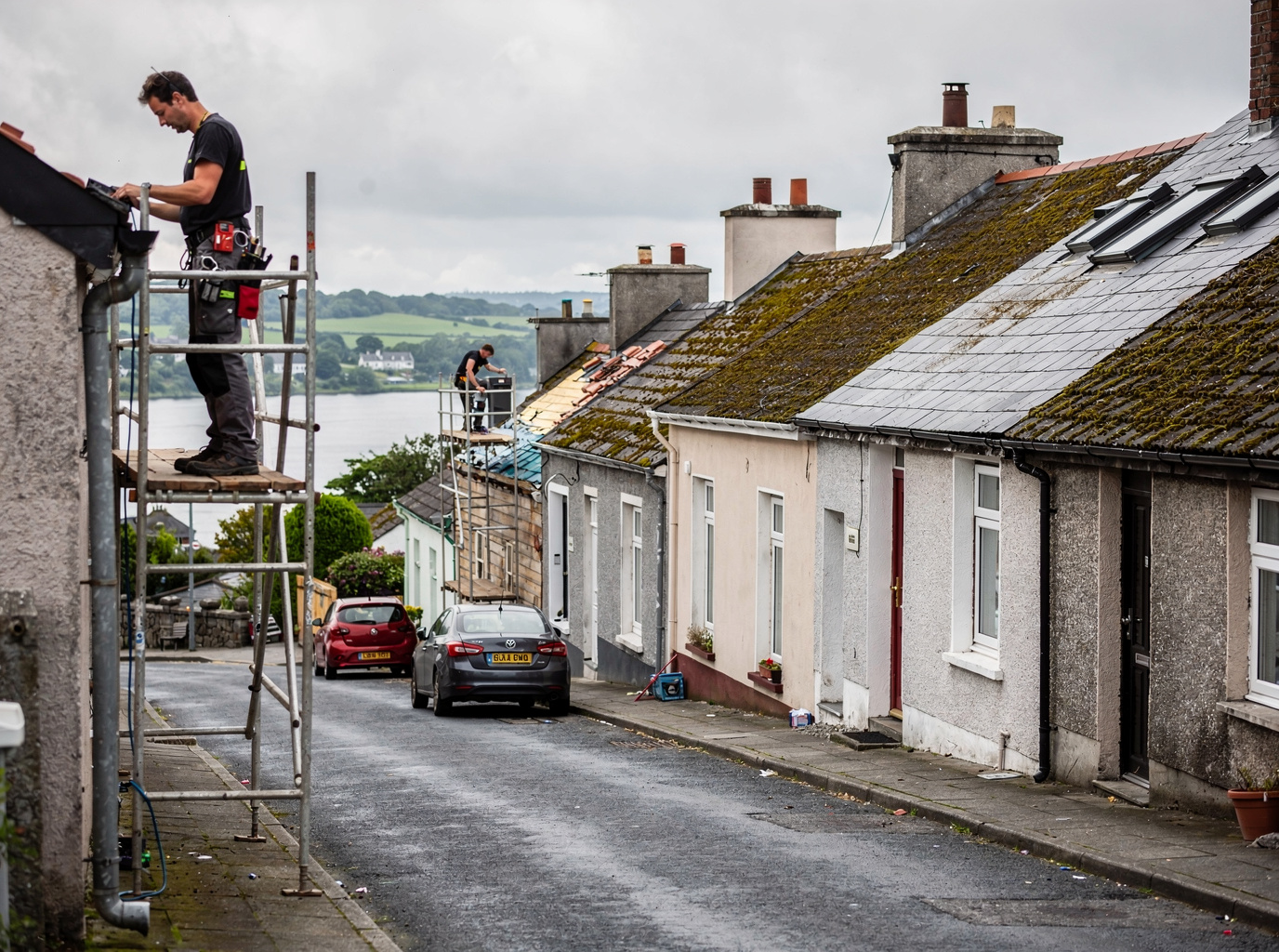
Newcastle experiences the full force of Atlantic weather systems that drive high wind loads and salt-laden rain across Galway roofs every winter. Homeowners here need repairs that account for 80–100 km/h gusts and constant moisture exposure rather than standard inland fixes.
Atlantic Weather Patterns and Their Effect on Newcastle Roofs
Galway’s western position means Newcastle roofs face repeated high wind shear and driving rain that finds every weak joint in slate and tile. Older terraces along the roads leading toward the city centre often show slipped slates after storms because the original fixings were never upgraded for current wind codes. Modern estates further out see ridge tiles lifted when mortar bedding cracks under repeated freeze-thaw cycles. Salt air accelerates corrosion on metal flashings and fixings, cutting typical lifespan by several years compared with sheltered parts of the county. Roofers working Monivea Rd jobs routinely replace stainless steel screws and lead where galvanised items have failed within fifteen years. Checking fixings after each named storm has become standard practice for any property within five kilometres of the coast.
Housing Stock Differences That Change the Job
Newcastle mixes pre-1960s stone and slate terraces with 1990s and 2000s housing estates, so the same repair method rarely suits both. Historic homes often carry thick natural slate that can be salvaged if caught early, while newer builds use concrete tiles that degrade faster under salt exposure. Chimney stacks on older terraces frequently need lead flashing renewal because the original soakers have corroded through. Flat roof extensions added to many 1980s semis require GRP or EPDM upgrades once the original felt blisters. Local crews assess each roof by walking the full perimeter rather than relying on drone photos alone, because hidden valley gutters behind extensions trap leaves and salt water. Slate & Tile Roof Replacements work is common here because full replacement often costs less long-term than repeated patch repairs on corroded fixings.
Practical Maintenance Steps for Newcastle Homeowners
Walk the roof twice a year, once after winter and once before the autumn gales, looking for lifted slates, cracked ridge mortar and rust streaks on flashings. Clear gutters and downpipes before October to prevent overflow that saturates eaves timbers. Check the condition of leadwork around chimneys and soil pipes every three years; small splits can be repaired with new lead rather than full replacement. Keep records of any work carried out so future buyers see documented maintenance. Properties in Newcastle that follow this routine typically extend roof life by eight to twelve years before major intervention is required.
When to Call for Professional Assessment
If you notice daylight in the attic after a storm, persistent damp patches on ceilings, or granules collecting in gutters from ageing tiles, book an inspection. Early intervention on a single slipped slate or failed flashing prevents water tracking across entire rafter runs. Emergency Roof Repairs & Leak Detection crews based at Monivea Rd can reach Newcastle addresses the same day when leaks appear during heavy rain. Delaying assessment often turns a €400–€800 repair into a full slope replacement once rot reaches the timbers.
Frequently Asked Questions
How often should Newcastle roofs be inspected? Twice yearly inspections catch storm damage before it spreads, especially after winter gales that reach 90 km/h or more along the Galway coast.
What roofing materials last longest here? Natural slate fixed with stainless steel nails or hooks gives the best performance against salt air; expect 60–80 years when installed correctly on older terraces.
Do SEAI grants apply to roof work in Newcastle? Grants cover insulation upgrades installed at the same time as roof replacement, provided the home meets current BER requirements; check the latest scheme rules before scheduling.
Can I repair rather than replace after storm damage? Small areas of slipped slate or failed flashing can often be repaired locally, but widespread corrosion or multiple lifted ridges usually requires slope replacement for a lasting result.